What If Painting Together Could Bring You Closer to Your Child—Without Any Mess or Stress?
Remember those messy art days from childhood? The way your hands turned every color of the rainbow, how your kitchen table became a studio, and how proud you felt holding up a lopsided sun or a three-eyed cat? Now imagine sharing that joy with your child—but without the paint spills, without the ruined clothes, without the stress of cleanup. What if you could create side by side, laughing, talking, connecting—just you and your child—through something as simple as drawing on a screen? Online painting platforms are quietly transforming how families spend time together. They’re not about talent, perfection, or even art in the traditional sense. They’re about showing up. They’re about presence. And the best part? You don’t need to be an artist. You just need to be there.
The Screen-Time Dilemma: When Devices Pull Families Apart
Let’s be honest—many of us feel uneasy about how much time our kids spend on screens. We’ve all seen it: the glazed eyes after hours of cartoons, the frustration when it’s time to turn off the tablet, the way our children seem to slip into another world while we’re left wondering how to reach them. We worry. Is this time really well spent? Are they learning? Are we losing connection? These concerns are real, and they’re shared by parents everywhere. But what if we’ve been looking at screens all wrong—not as walls between us, but as bridges?
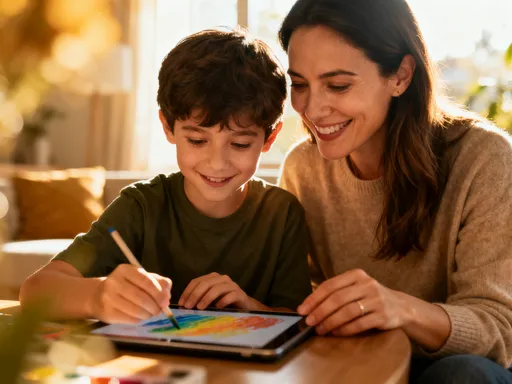
The truth is, not all screen time is the same. Scrolling through endless videos or playing solo games can feel isolating. But when technology becomes a shared experience—something you do together—it transforms. Imagine your child not just watching a character on a screen, but creating one with you. That shift—from passive consumption to active creation—is where the magic happens. Online painting platforms invite families into that space. Instead of sitting back-to-back on the couch, each absorbed in your own digital world, you’re side by side, building something together. You’re talking. You’re laughing. You’re making choices: What color should the sky be? Should the dragon have wings or fins? These small decisions become moments of connection.
And here’s the thing: we don’t have to reject technology to protect our family bonds. We can use it to strengthen them. The key isn’t banning screens—it’s choosing how we use them. When we engage together in creative play, we turn screen time into quality time. We show our children that technology doesn’t have to pull us apart. It can bring us closer—if we use it with intention.
From Blank Canvas to Shared World: How Online Painting Platforms Work
So what exactly are these online painting platforms, and how do they work? Think of them as digital art studios you can open on your phone, tablet, or computer. No brushes, no paints, no cleanup. Just a blank canvas waiting for your touch. Most platforms are designed to be simple—so simple that even a five-year-old can tap, swipe, and start creating within seconds. You don’t need special skills or software. You don’t need to download anything complicated. Many are free, browser-based, and ready to use with just a click.
The real beauty, though, is in the collaboration. Some platforms let you and your child paint on the same canvas at the same time, even if you’re using separate devices. You see each other’s strokes appear in real time—like drawing on the same piece of paper, even if you’re sitting across the room. One of you might start with a wobbly tree, and the other adds birds. Then you both decide to make it a rainbow tree. There’s no pressure to be perfect. In fact, the messier it gets, the more fun it feels.
These platforms come with easy tools: color palettes, brush sizes, erasers, and even fun stamps like stars, hearts, or animals. Some let you save your artwork, share it with family, or print it as a keepsake. Others have built-in features like undo buttons—so no one has to panic over a misplaced line. The interface is usually bright, friendly, and intuitive, with big icons and clear labels. And the best part? There’s no mess to clean up. No stained shirts, no dried-up paint tubes, no scrubbing brushes. Just creativity, flowing freely.
For parents who feel intimidated by tech, these platforms are a gentle entry point. You don’t need to be a digital native to use them. You just need curiosity and a willingness to try. And when you do, you open a door—not just to art, but to a new way of being together.
A New Kind of Quality Time: Why Drawing Together Matters
We all want quality time with our children. But let’s face it—real connection doesn’t always happen during structured activities or forced conversations. Sometimes, the deepest moments come when we’re just doing something simple, side by side. Drawing together creates that space. It’s not about the final picture. It’s about the quiet moments in between—the shared smiles, the silly ideas, the way your child glances at you and says, “Look what I made!” with pure pride.
For some children, especially those who are shy or struggle with words, art becomes a language. They might not say, “I’m feeling nervous about school,” but they might draw a small figure standing at the edge of a playground. When you draw beside them—maybe adding a friendly dog or a smiling sun—you’re not fixing anything. You’re just being there. And that presence speaks volumes. You’re saying, without words, “I see you. I’m with you.”
For busy parents, these moments are a gift. There’s no agenda, no pressure to teach or correct. You’re not multitasking. You’re not checking your phone. You’re fully there, focused on the same canvas, the same colors, the same silly story you’re making up together. That kind of attention is rare—and powerful. It builds trust. It teaches patience. It shows your child that their thoughts, their imagination, their voice matters.
And sometimes, the most meaningful conversations start with a simple question: “What are you drawing?” That’s how a child might tell you about their dream of flying, their fear of the dark, or their love for their pet goldfish. When we draw together, we create emotional safety. We say, “This is a space where anything can happen. Where mistakes are part of the fun. Where we can just be us.”
Making It Happen: Simple Ways to Start a Parent-Child Painting Routine
You might be thinking, “This sounds lovely, but when? How do I fit one more thing into an already full day?” The good news is, you don’t need hours. You don’t need special planning. Start small. Try a 15-minute “draw-and-chat” after dinner. No rules. No goals. Just open a painting app and start doodling together. You might begin with something simple: “Let’s each draw one thing from our day.” You sketch your morning coffee. Your child draws their favorite snack. Suddenly, you’re talking about their school lunch, your work meeting, the dog who barked too loud this morning. It’s not about the art—it’s about the conversation it sparks.
Or try a weekend theme: “Draw Your Dream Pet.” Is it a cat with wings? A dog made of jelly? A unicorn that eats pizza? Let your imaginations run wild. Laugh at the silly ideas. Celebrate the creativity. You don’t have to be good. In fact, the worse you are, the more your child might relax and enjoy it. When they see you drawing a lopsided house or a blob with legs, they think, “Oh, it’s okay to be messy too.”
Another idea: use painting to talk through feelings. On a tough day, suggest, “Let’s draw how we’re feeling.” You might end up with storm clouds, a sad face, or a sun hiding behind a cloud. Or maybe bright fireworks and hearts. No judgment. No fixing. Just creating. Later, you might say, “I noticed your drawing had a lot of red today. Was that for anger? Or energy?” Let them explain. Let them lead.
And don’t forget to keep it light. Use sample dialogue to make it feel natural. “Hey, want to draw something silly with me?” “What if we made a world where everything is upside down?” “I’m going to draw a monster. Can you draw a superhero to fight it?” These little prompts turn drawing into play. The goal isn’t a masterpiece. It’s connection. It’s presence. It’s saying, “I’m here, and I’m all yours—for these few minutes.”
Beyond the Canvas: Skills Grown Through Shared Creativity
While the emotional benefits of drawing together are deep, the hidden skills your child gains are just as valuable. Think about it: every time they pick a color, they’re making a decision. Every time they draw a line, they’re using fine motor skills. When they erase and try again, they’re learning resilience. When they explain their drawing, they’re practicing communication. These moments aren’t just fun—they’re foundational.
For young children, the act of holding a stylus or using their finger on a screen strengthens hand-eye coordination and finger control—skills that support writing, cutting with scissors, and other daily tasks. For older kids, the creative process builds confidence. They learn that their ideas matter. They see that there’s no single “right” way to draw a tree or a face. This openness fosters innovation and problem-solving—skills that will serve them for life.
But it’s not just for kids. Parents grow too. When we engage in creative play, we tap into our own imagination. We slow down. We become more patient. We model curiosity and flexibility. We show our children that learning doesn’t stop at adulthood—that it’s okay to try something new, even if we’re not good at it. In a world that often measures success by results, these moments teach a different lesson: that the process matters. That showing up is enough.
And let’s not underestimate the emotional intelligence built through shared creativity. When your child draws a dark sky and you ask, “What’s happening in this world?” they learn to name their feelings. When you add a rainbow without fixing the storm, you teach acceptance. These are quiet, powerful lessons in empathy, self-awareness, and emotional regulation—skills that schools don’t always teach, but that shape kind, resilient human beings.
Choosing the Right Platform: What to Look for (Without Getting Overwhelmed)
With so many apps and websites out there, it’s easy to feel overwhelmed. Should you pick one with 50 brush types? One that looks like a professional studio? The truth is, you don’t need fancy features. In fact, simplicity is better—especially when you’re starting out with a child. Look for platforms that are easy to navigate, with big buttons, clear tools, and minimal distractions. Avoid apps filled with ads or in-app purchases that pop up during your session. You want a calm, focused space—not a digital carnival.
Privacy matters too. Choose platforms that don’t require personal information or social media logins. Some let you create a private room with a simple link—perfect for just the two of you. Check if the platform saves your work automatically or lets you download it. That way, you can look back on your creations together, even weeks later.
Collaboration features are key. Can you both draw at the same time? Do you see each other’s strokes in real time? Is there a chat or voice option if you’re apart? These details make a big difference in how connected you feel. Also, make sure the platform works on the devices you already have—whether it’s a tablet, phone, or laptop. No need to buy new gear.
The best approach? Try one platform together as an adventure. Say, “Let’s test this out—like scientists!” There’s no pressure to stick with it. If it feels clunky or confusing, close it and try another. This isn’t a test. It’s an exploration. And the real win isn’t finding the “perfect” app—it’s spending time together, curious and open, ready to create something new.
The Bigger Picture: Building a Family Culture of Creativity
When we draw with our children, we’re doing more than passing time. We’re building a family culture—one where creativity is valued, where expression is welcomed, where connection is nurtured. These small rituals, repeated over time, become part of your family’s story. Years from now, your child might not remember every homework assignment or chore, but they’ll remember the nights you painted dragons together, the way you laughed at your wobbly drawings, the quiet comfort of creating side by side.
Life changes. Kids grow. Schedules get busier. But when you’ve built a habit of creative time, it becomes an anchor—a way to reconnect, even in stressful seasons. Maybe it’s a Sunday morning ritual. Maybe it’s a go-to activity on rainy days. Whatever form it takes, it becomes a signal: “This is our time. This is where we listen. This is where we play.”
And in a world that often feels fast and fragmented, these moments are a quiet rebellion. They say, “We don’t have to be busy all the time. We don’t have to perform. We can just be here, together, making something that doesn’t have to be perfect—just ours.”
So here’s the invitation: not to become artists, but to become present. To open a blank canvas—not with pressure, but with possibility. To let your child see you try, fail, laugh, and try again. To build something—stroke by stroke, moment by moment—that no one else could create. Because in the end, it’s not about the painting. It’s about the love, the attention, the quiet joy of being together. And that? That’s a masterpiece worth creating.